The night I received this ring, I was asked only one question: if I was afraid. I remain as steadfast now as I was then, I am fearless. ~ Hal Jordan, Lanterns (2026)
(Spoilers for Lanterns)
There’s a few reasons why I’ve always been fascinated by actors. I feel I owe them a great deal, given how many characters inspired me growing up. As a child, I almost felt that the actors I watched on TV taught me how to speak, how to make my emotions legible to others, and how to mask.
All this is to say that I’m grateful for their work, and specifically for the work that Kyle Chandler did in bringing Hal Jordan to life in the TV show Lanterns.
Despite being a lifelong superhero fan, I never had any cause to care about Green Lantern.
For those who aren’t familiar: Green Lanterns are intergalactic superheroes who wear rings that manifest anything they imagine into reality. The running theme is that in order to become a Green Lantern and receive a ring, you must prove that you can overcome great fear. Both in comics and on-screen, Hal Jordan is usually the “main” Green Lantern we follow, and is considered the most fearless of them all.
The TV show Lanterns focuses on the relationship between Hal and his trainee John Stewart (played to perfection by Aaron Pierre). The version of Hal that we get is vastly different from what comic-book fans might’ve expected. He’s older, jaded, and in constant conflict with everyone around him. He barely wears his superhero uniform, it’s even established that he hates wearing it.
It’s no accident that there’s been a strong online reaction towards how the character’s presentation, because this is very much a fallen hero and the writers want us to feel it. He’s The Last Jedi‘s deconstruction of Luke Skywalker, but done flawlessly.
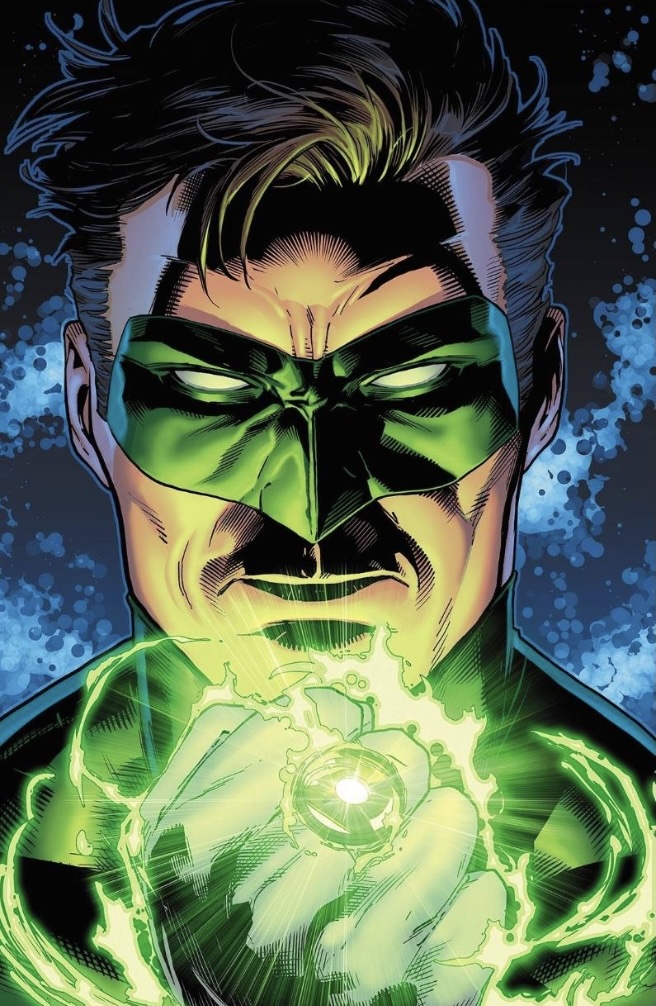
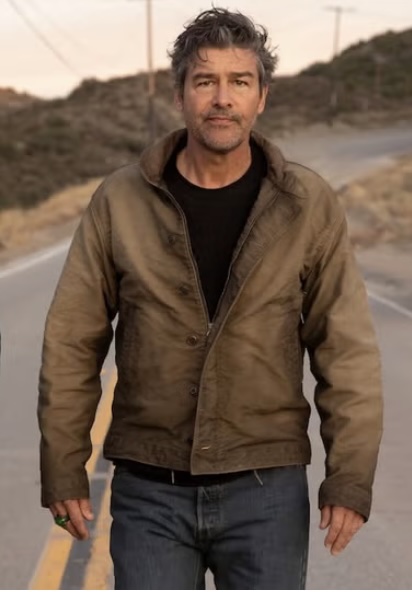
What the show articulates is that Hal Jordan’s fearlessness isn’t actually bravery. He’s depressed, lonely, and quietly carries trauma. He’s fearless because his response to pain is to bury himself completely in the mission. There’s nothing else in his life that gives him meaning, being a superhero is his purpose, and he is enslaved to it. The ring is therefore his shield, he has something to live for and he has a way to avoid sitting with himself. But it is ironically that very dedication, that willpower so central to his character, that keeps him alienated and unhappy– and keeps his demons alive.
I’m not fearless because I’m brave, I’m fearless because I’m broken. ~Hal Jordan, Lanterns
It’s a dramatic inversion of the comic book material, but it feels timely. Our productivity-oriented clusterfuck of a society will advertise achievement as the bulwark against the existential void, satisfaction and meaning derived from work. If you keep moving and immerse yourself in something, you don’t have time to be sad. But Hal Jordan’s story calls that behavior out for what it is, avoidance. I suspect this applies more strongly for people with ADHD, we can’t fucking stand boredom or inertia. But at the same time, the train of activities and distractions, or one hyper–focused activity, is temporary relief and not a cure. We always return to the silence, to the void. How many of us are doing something similar in our early 20s? Just working while carrying our pain because that’s all we know how to do?
I’ve looked for Green Lantern rings everywhere in my own life. I’ve desperately looked to external objects to give my life meaning: pursuits, people. I’ve allowed one particular hobby to eat up all my spare time and effort because that feels better than sitting at home, but it doesn’t save me. And I suspect that’s a common experience for people my age, and why this character has made such an impression. It’s one of the most compelling explorations of depression, loneliness, and modern masculinity that I’ve seen lately.
Notably, it’s only after the ring is (forcibly) taken from Hal that we see him actually make some kind of progress.
I frequently find myself going back to the show’s treatment of fear, and the question that is always asked when Green Lantern ring is offered: “are you afraid?”. I remember it every time I have to confront something in my life. Because unsurprisingly, I am afraid. My existence is painfully far from what I envisioned for myself a year ago, I work a job that brings me no closer to my interests or sense of self, and I feel I have very few sources of stimulation. Whatever aspirations I had, be it to participate in a radical political project, explore the world, or learn as much as I could, feel dismally far right now. And since antidepressants actively make my insomnia worse, I often have to choose between sleep and emotional calm. I find myself phrasing “am I afraid?” as a challenge; to find the willpower to keep going, to believe that I’m still capable, that I still possess what makes me unique, that I can still be emotionally vulnerable and connect with others. But yes, now I wonder if that’s overcoming fear, or if it’s me avoiding the issue.
But even so, I’m curious as to what the show’s final stance on bravery will be. Through both Hal and John Stewart (who is abusively conditioned by his parents to not feel fear) it casts doubt on the idea that “no” is always the correct answer, or at least that bravery equates to not having fears.


Leave a comment